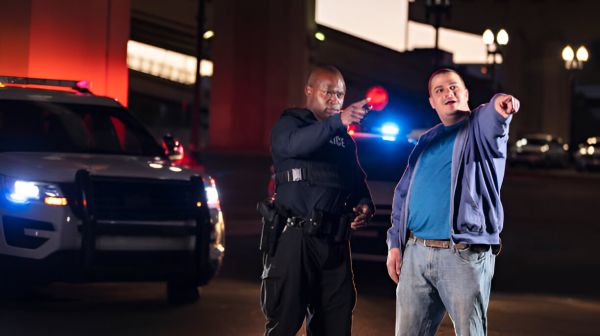
North Carolina charges impaired driving as DWI, short for driving while impaired. The offense is defined by N.C. Gen. Stat. § 20-138.1. Many drivers still search for a DUI lawyer Raleigh NC residents can call, or for help with a drunk driving charge. The citation itself reads DWI.
A Raleigh DWI lawyer defends these charges in Wake County. Arrests come from routine traffic stops, crash investigations, and checkpoints. What happens in the first days after an arrest may shape both the criminal case and the license.
DWI Charges in Raleigh, NC
The State can prove impaired driving three ways. It needs only one:
- driving on a highway, street, or public vehicular area while under the influence of an impairing substance;
- an alcohol concentration of 0.08 or more at any relevant time after the driving; or
- any amount of a Schedule I controlled substance in the blood or urine.
An impairing substance is not limited to alcohol. It covers illegal drugs and lawfully prescribed medication. Being entitled to take a drug is not a defense.
The legal limit is 0.08 for most Raleigh drivers and 0.04 for commercial drivers. Drivers under 21 face zero tolerance. Any amount of alcohol in the body can support a charge. This matters around NC State campus and downtown.
Raleigh DWI arrests come from the Raleigh Police Department, the Wake County Sheriff's Office, and the State Highway Patrol. Stops concentrate on I-40, the I-440 Beltline, and Capital Boulevard. Officers also stop drivers on routes leaving Glenwood South and Fayetteville Street at closing time. Raleigh DWI cases are prosecuted in Wake County.
DWI Checkpoints in Raleigh
North Carolina permits properly conducted impaired-driving checkpoints. DWI checkpoints in Raleigh are lawful when officers follow the rules. Drivers who look up DUI checkpoints Raleigh agencies run want one answer: was the stop valid?
A lawful checkpoint generally needs an established written plan approved in advance by a supervising officer. The plan must set a pattern for which vehicles are stopped. Examples include every car or every third car. The officer's choice at the scene does not govern. Placement and marking must also be reasonable. Drivers must see what the operation is.
A checkpoint that departs from its own plan may be challenged. When the stopping pattern shifts mid-shift, defense counsel reads the written plan against the officers' testimony.
At the stop, an officer asks brief questions and watches for signs of impairment. If the officer develops reasonable suspicion, the driver is sent to a secondary screening area. Turning around before a checkpoint is not automatically a crime. But an officer may follow and stop a driver who commits a separate violation. Checkpoint validity is one of the most litigated issues in Wake County DWI cases.
How a Raleigh DWI Lawyer Defends the Case
Misdemeanor DWI cases are heard in Wake County District Court. A DWI attorney Raleigh drivers hire early can review the record while it is still fresh.
The stop. The first question is whether the officer had reasonable suspicion, or whether a checkpoint met the requirements above.
Field sobriety tests. Counsel checks whether each standardized test was given and scored the way the officer was trained.
Breath testing. Results depend on a maintained instrument and an observation period the officer actually honored. A shortened observation period changes what a DUI attorney Raleigh clients retain asks the analyst on cross-examination.
Blood testing. A blood draw raises separate questions about procedure and the chain of custody from the draw to the lab.
Implied consent. Before a chemical analysis, the driver must receive the rights required by the implied consent statute, N.C. Gen. Stat. § 20-16.2. Whether that advisement was given correctly may matter to both the criminal case and the license case.
The license track. A willful refusal triggers a civil revocation separate from anything the court later orders. Criminal charges and the license case run on their own deadlines. A DWI conviction later brings its own revocation on top of that. A limited driving privilege may be available depending on the circumstances.
North Carolina uses six sentencing levels. These are Aggravated Level One plus Levels One through Five. The levels are set by weighing grossly aggravating, aggravating, and mitigating factors. A sentence can include fines, license revocation, community service, and jail time. There is no flat penalty for a first offense. The defense develops mitigating factors and contests the aggravating factors the State asserts.
Speak With a Raleigh DWI Lawyer
DrunkDrivingDefense.com connects people charged in the Raleigh area with a DWI lawyer Raleigh NC drivers can meet quickly. A free consultation reviews the stop or checkpoint, the testing, the license status, and the sentencing exposure the facts may support.
The license side moves on a short window, often measured in days. Waiting can cost options. Lining up legal representation early keeps more of them open. Every case turns on its own facts. Only a lawyer who reviews the file can advise on a specific charge.
Call 1-888-839-4384 or use our online contact form to speak with a North Carolina DWI lawyer about a Raleigh charge.