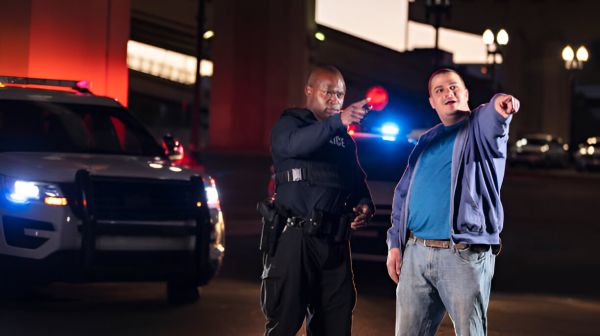
A DUI in Los Angeles is a criminal charge under California law for driving under the influence of alcohol, drugs, or both. A conviction can bring fines and court assessments, a driver's license suspension handled through the DMV, a mandatory DUI education program, probation, and in some cases jail. Talking with a Los Angeles DUI lawyer early matters, because an arrest opens two separate cases at once: the criminal case in court and the license case at the DMV. A DUI attorney Los Angeles drivers reach in the first days after an arrest still has time to protect both.
A charge is also not a conviction. The prosecution has to prove its case, and the evidence behind it can be tested. This page explains how California defines the offense, what happens at DUI checkpoints, what penalties may look like, and how our Los Angeles DUI defense attorneys respond, depending on the circumstances of the stop.
What Counts as a DUI in Los Angeles?
California's DUI law appears in driving under the influence. The statute does two things. It makes it unlawful to drive while under the influence of alcohol or drugs. It also makes it unlawful to drive with a blood alcohol concentration (BAC) of 0.08% or higher. Those are separate theories, and Los Angeles prosecutors commonly file both from the same traffic stop.
That distinction matters for the defense. The "under the influence" theory rests on how a driver looked, spoke, and moved. The 0.08% theory rests on a number produced by a machine or a lab. Each one can be tested on its own terms.
Lower limits apply to some drivers. A driver under 21 may face charges at a BAC of 0.01%. A commercial driver may face charges at 0.04%. Drivers already on DUI probation also live under a tighter limit than everyone else.
Alcohol is not the only basis for a charge. A DUI can rest on prescription medication taken exactly as directed, on marijuana, or on a mix of substances when no single one would be enough by itself. Drug cases work differently from alcohol cases. There is no per se number for most drugs, so the prosecution leans on officer testimony and a blood test showing the substance was present. Presence is not the same as impairment, and the gap between the two is often the heart of a drug DUI defense.
Timing matters inside the number itself. The law reaches impairment and BAC while a person is driving, not at the police station an hour later. Alcohol keeps absorbing after the last drink. A station reading can therefore sit above what the driver's BAC actually was at the wheel.
Impairment evidence usually comes from three places: the officer's observations at the roadside, field sobriety testing, and chemical testing of breath or blood. None of the three is beyond question. A DUI lawyer Los Angeles CA drivers hire will read all three against each other and look for the points where they disagree.
Los Angeles adds its own texture. The county runs one of the busiest court systems in the country, and DUI cases are filed out of courthouses from Metro to Van Nuys to Long Beach. Filing practices and program availability vary from one courthouse to the next. Finally, a charge is an accusation. A filing decision says nothing about how the case ends.
Penalties for a First or Repeat DUI in Los Angeles
California sets sentencing ranges, and judges in Los Angeles County work inside them. The result in any single case depends on the facts, the driver's record, and the judge. What follows describes typical exposure, not a promised outcome.
A first DUI conviction is usually a misdemeanor. Base fines typically run from about $390 to $1,000, and court assessments often push the real cost past $2,000. Courts commonly order three to nine months of DUI education and three to five years of informal probation. Jail is possible, up to six months, though many first cases resolve without it. The DMV separately suspends the license for roughly six months, and a restricted license may be available depending on the circumstances.
Exposure climbs for repeat convictions inside California's ten-year lookback period. A second conviction typically carries a longer jail range, an 18 to 30 month DUI program, and a two-year suspension. A third typically carries a longer minimum jail term, a 30-month program, and a three-year revocation. A fourth DUI inside the lookback window, or a DUI involving injury, may be filed as a felony and carry state prison exposure.
Aggravating facts raise exposure at every tier. A high BAC, a collision, an injury, a child in the car, or a refusal of chemical testing can each push a sentence toward the top of its range. Judges may add jail time, lengthen the program, or impose stricter probation terms.
Sentences also carry consequences the minute order does not list. California commonly requires an ignition interlock device for a period after a DUI conviction. Insurers typically reclassify the driver and require proof of financial responsibility, which raises premiums for years. A conviction can affect a commercial license, professional licensing, and immigration matters for non-citizens. Anyone in those categories should raise it with counsel early, because it may change which resolutions are worth pursuing.
Probation terms deserve a close read as well. California DUI probation typically bars driving with any measurable alcohol in your system. It also requires you to submit to chemical testing on request. A violation during the probation period can bring the suspended jail time back into play.
One point is easy to miss. The criminal case and the DMV license case are separate proceedings with separate deadlines. Winning one does not automatically decide the other, and the DMV clock starts running at arrest.
DUI Checkpoints and Chemical Testing in Los Angeles
Sobriety checkpoints are a routine enforcement tool across Los Angeles County. Many people search for DUI checkpoints Los Angeles agencies plan around holiday weekends, and those weekends are when the operations cluster. Checkpoints are legal in California, but only when they run inside real limits.
Those limits are where challenges begin. Supervising officers, not the officers working the line, must decide where and when a checkpoint operates. The stopping sequence has to follow a neutral formula, such as every third car, rather than an officer's hunch. The site needs adequate warning and signage so drivers can see what they are approaching. Each stop must be brief, and the operation must run for a reasonable duration at a reasonable location.
A checkpoint that departs from those rules can become the basis for a suppression motion. When a checkpoint is involved, our firm routinely requests the written supervisory authorization and the operational logs. Those records show the stopping formula the agency actually used. Comparing them against what happened at the scene sometimes surfaces a departure worth litigating.
What happens at the checkpoint itself is usually brief. An officer looks for the odor of alcohol, watches speech and eye movement, and asks a few questions. Drivers must provide a license, registration, and proof of insurance. Answering questions about where you have been or what you have had to drink is a different matter, and those answers frequently end up quoted in the report.
Chemical testing follows a separate rule. Under implied consent, a driver lawfully arrested for DUI is deemed to have consented to a chemical test of blood or breath. Refusing that post-arrest test carries its own license consequences, and they stack on top of the criminal case.
The roadside test before arrest is not the same thing. For an adult driver who is 21 or older and not on DUI probation, the preliminary alcohol screening breath test is generally optional. Many drivers do not know that when they are standing on the shoulder. Whether a refusal helped or hurt depends on the circumstances of your stop, and it is worth reviewing with a lawyer.
How a Los Angeles DUI Defense Attorney Fights the Charge
A DUI defense attorney in Los Angeles starts with the calendar. You generally have ten days from the date of arrest to request a DMV hearing. Miss that window and the suspension takes effect automatically. Our office runs the hearing request and the criminal case on parallel tracks, because for Los Angeles clients the two almost never move at the same speed.
Next comes the record. A DUI defense lawyer in Los Angeles should obtain and audit the police report, the body-camera and dash-camera footage, and, where a checkpoint was involved, the operational logs. Reports get written from memory hours later. Footage does not. The gap between the two is often where a case turns.
The stop itself gets its own review. Officers need reasonable suspicion to pull a car over, and the stated reason has to hold up against the video. Field sobriety tests get the same treatment. These tests have administration standards covering instructions, demonstration, and surface conditions. Tests given on a slope, in the dark, or beside moving traffic are open to challenge.
Chemical testing is the most technical piece. A DUI defense attorney Los Angeles prosecutors face regularly will request instrument calibration and maintenance records, review blood draw procedure and chain of custody, and examine rising-BAC timing, since alcohol absorbed shortly before a stop may read higher at the station than it did behind the wheel.
Blood cases carry an extra option. California preserves a portion of the blood sample, and the defense can arrange independent retesting at a separate laboratory. A second result that does not match the first raises a real question for a jury. Breath cases work differently, because the sample is gone the moment it is measured. That leaves the instrument's maintenance history as the main line of attack.
The DMV hearing itself is worth understanding. It is an administrative proceeding, not a trial, and the hearing officer works for the department. The issues are narrow: whether the arrest was lawful, whether the officer had reasonable cause, and whether the driver was over the limit or refused testing. Even so, the hearing gives the defense an early chance to question the arresting officer under oath. That testimony carries over into the criminal case.
Timing shapes strategy too. Calibration records and footage are not always produced on the first request, and a case set for early resolution can move faster than the evidence arrives. Asking for the right continuance is sometimes the most valuable thing done in the first month.
What those findings show drives everything after. A strong suppression issue may be worth litigating. A weaker one may still move the negotiation, whether toward a reduced charge or a different sentencing structure. No responsible DUI defense lawyer Los Angeles drivers consult will promise a dismissal, but a prepared file changes the conversation.
Talk With a Los Angeles DUI Defense Lawyer Today
The DMV clock starts at arrest and runs short, so early contact matters. DrunkDrivingDefense.com offers a free, confidential consultation about Los Angeles DUI charges. On that first call we walk through the traffic stop, what testing was done and how it was done, and where you stand on the DMV timeline. You end the call knowing which deadlines apply to you and what the next step looks like. Call 1-888-839-4384 or use our online contact form to get started. We make no promises about results, but we can make sure your case gets a real review.
Frequently Asked Questions
Are DUI checkpoints in Los Angeles legal?
Yes, with conditions. California allows sobriety checkpoints when supervising officers choose the time and place, vehicles are stopped by a neutral formula, the site carries adequate warning, and each stop stays brief. A checkpoint that ignores those requirements may give the defense grounds to challenge the stop and the evidence that followed it.
What is the legal BAC limit for a DUI in Los Angeles?
For most adult drivers the limit is 0.08%. It drops to 0.04% for commercial drivers and 0.01% for drivers under 21. You can also face charges below those numbers if an officer concludes that alcohol, drugs, or a combination impaired your driving.
Can I refuse a breath or blood test after a DUI arrest in Los Angeles?
You can physically refuse, but there is a cost. California's implied consent law treats a lawful DUI arrest as consent to a post-arrest breath or blood test, and refusing carries separate license consequences. The optional roadside screening test before arrest is a different test, and adult drivers who are not on DUI probation may generally decline that one.
How soon do I have to request a DMV hearing after a Los Angeles DUI arrest?
Generally ten calendar days from the date of arrest. That request is separate from anything happening in criminal court, and it has to be made directly to the DMV. Missing the window usually means the suspension takes effect without any hearing at all.
Do I need a DUI lawyer for a first offense in Los Angeles?
The law does not require one. A first DUI still creates a criminal record, a license suspension, and years of probation. A lawyer can review the stop and the testing, handle the DMV hearing, and identify options such as a reduced charge, depending on the circumstances of your case.
What is a "wet reckless" in a Los Angeles DUI case?
A wet reckless is a reduced charge that prosecutors sometimes offer when the evidence of impairment is weak or the BAC sits close to the limit. It typically carries a shorter program, lighter probation terms, and no automatic license suspension from the court. It is not available in every case, and whether it is realistic depends on the facts.